
By Christine Stenner, German Attorney in the United States at Stenner Law| Foreign Legal Consultant (PA) | September 2, 2026
Why Become a German Citizen?
If you are an American who travels frequently to Europe, you probably already understand one of the immediate benefits of German citizenship.
You arrive after a long overnight flight and head toward passport control. As a U.S. citizen, you join the line for non-EU citizens. And traveling to Europe as a non-EU citizen is becoming more complicated.
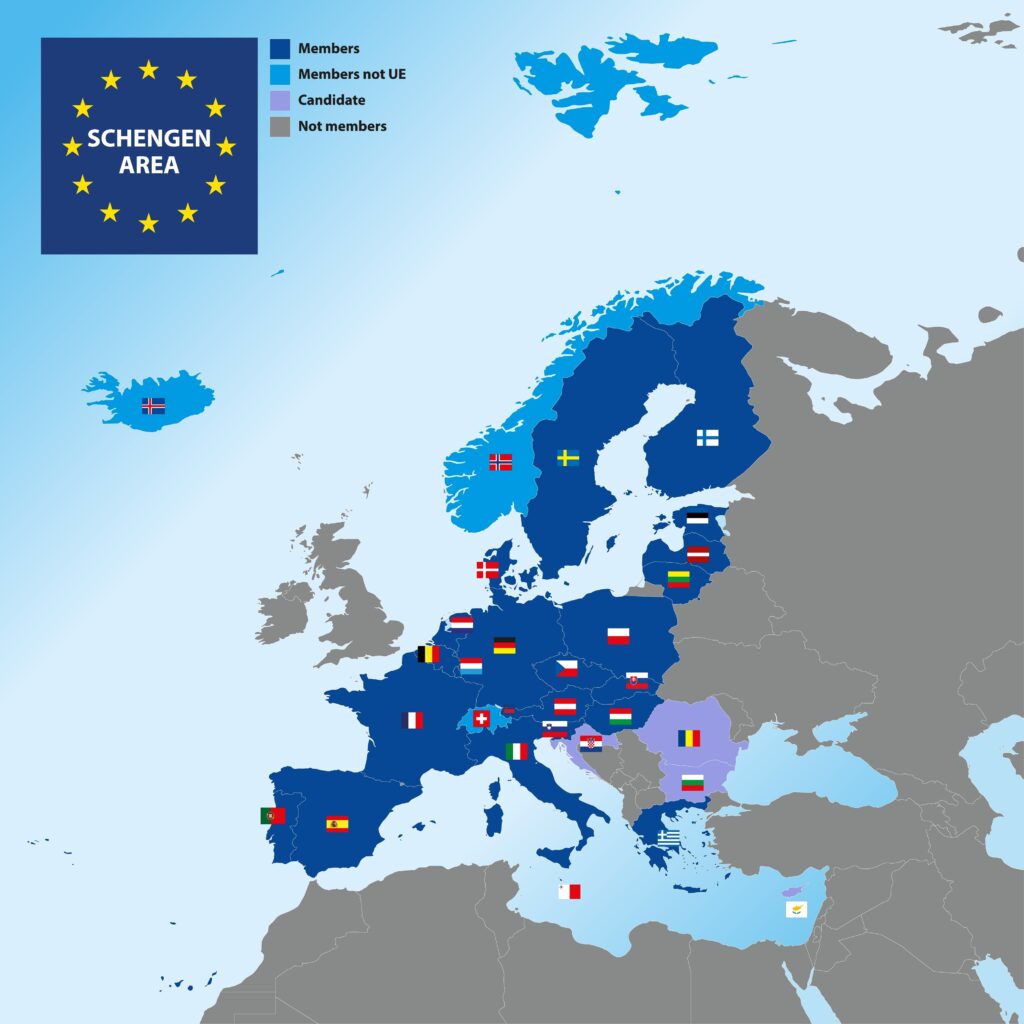
The European Union’s new Entry/Exit System (EES) is now operational. Non-EU travelers entering the Schengen Area for short stays are registered electronically, including their passport information, facial image and fingerprints. ETIAS, a separate travel authorization that Americans will need to obtain before traveling to Europe, is expected to follow.
Meanwhile, travelers with a German or other EU passport head to the EU citizen lanes. At many major European airports, they can simply scan their passport at an automated e-gate, look into the camera for facial recognition, and walk through.
No lengthy immigration line. No EES registration. No ETIAS authorization.
For frequent travelers, that alone can make having a German passport pretty attractive.
But there is much more to German citizenship.
German citizenship also makes you a citizen of the European Union. It gives you rights and opportunities throughout Europe, not just in Germany.
What Are the Benefits of German Citizenship?
German citizenship gives you the right to live and work throughout the European Union, access educational opportunities in Germany and Europe, travel with one of the world’s most powerful passports, and potentially pass German citizenship to your children and future generations.
And if you are an American, you can generally become a German citizen without giving up your U.S. citizenship.
Here are just a few of the benefits.
Can German Citizens Live and Work Anywhere in the European Union?
Yes. As a German citizen, you have the right to live and work in Germany and throughout the European Union.
You do not need to obtain a work visa or qualify for a residence permit before making the move.
You could take a job in Germany, spend a few years living in France, start a business in Italy, or eventually retire somewhere in Europe.
German citizenship gives you options.
Can German Citizens Study Tuition-Free in Germany?
One of the biggest benefits for families with children may be access to higher education in Germany.
Most public universities in Germany charge no tuition for Bachelor’s programs and many Master’s programs. Students generally pay only a relatively small semester contribution, which often includes or contributes toward public transportation.
German citizenship also gives you EU citizen status when studying elsewhere in the European Union, which can provide additional advantages depending on the country and university.
Can German Citizens Use Germany’s Healthcare System?
Germany has a comprehensive healthcare system in which the large majority of the population is covered by statutory health insurance.
The rules are complicated and depend on factors such as employment, income, age and previous insurance history. But if you move to Germany and become employed there, you may be eligible or required to participate in Germany’s statutory healthcare system.
For Americans considering living, working or eventually retiring in Germany, access to the German healthcare system can be an important consideration.
What Are the Travel Benefits of a German Passport?
A German passport is consistently considered one of the world’s most powerful passports, providing visa-free or visa-on-arrival access to a large number of countries.
Within the European Union, however, the benefit goes much further.
You are not entering Europe as an American visitor. You are entering as an EU citizen.
That means no ETIAS authorization, no EES registration, and access to EU citizen passport-control lanes.
Can I Keep My U.S. Citizenship If I Become German?
Yes.
Becoming German does not mean that you have to stop being American.
Germany and the United States both permit dual citizenship. Since Germany changed its citizenship law in June 2024, German law generally no longer requires someone acquiring German citizenship to give up an existing citizenship.
For most Americans, this means you can be both a German and a U.S. citizen and hold both passports.
Do I Need to Speak German for German Citizenship by Descent?
Generally, no.
If your claim to German citizenship is based on descent, you generally do not have to prove that you speak German.
This is different from traditional naturalization in Germany, where German language skills are usually required.
So if your German parent, grandparent or another ancestor may have passed German citizenship to you, the fact that you do not speak German does not necessarily prevent you from claiming citizenship.
Do I Have to Live in Germany to Claim German Citizenship by Descent?
No.
If you qualify for German citizenship based on descent, you do not have to move to Germany.
You can continue living in the United States and still be a German citizen.
You may never decide to move to Germany. Or you may decide to move there 5, 10 or 20 years from now.
The important part is that you have the choice.
Can I Pass German Citizenship to My Children?
German citizenship can generally be passed from one generation to the next, subject to the requirements of German citizenship law.
That means obtaining or confirming German citizenship may create opportunities not only for you, but also for your children and future generations.
Your children may want to study in Germany. Your grandchildren may want to work in Europe. Someone in a future generation may simply want the freedom to live somewhere other than the United States.
What starts with researching your German ancestry today can create opportunities for your family decades from now.
German Citizenship Creates Options and Opportunities
You may never move to Germany.
You may never work in Europe.
Your children may never decide to study at a German university.
But they can.
That is one of the greatest benefits of German citizenship.
It creates options.
It gives you and potentially future generations the ability to live, work, study and build a life in Germany and throughout the European Union.
And yes, the next time you land in Europe after an eight-hour flight and see the long line at passport control, you may appreciate that German passport for a much simpler reason.
At Stenner Law, we are specialists in German citizenship for Americans with German roots. We speak both German and English, and we have lived in both countries, which means we understand not only the legal side of these cases but also the practical work of tracking down old documents on both sides of the Atlantic. If you think you may qualify, the fastest way to find out is to complete our pre-consultation screening questionnaire. Your answers help us determine whether a consultation with German attorney Christine Stenner is the right next step for your case.
You can also reach us at office@stennerlaw.com
Or call our office at (215) 770-9488
We will review the information and let you know whether your case appears to meet the basic requirements for a consultation.
About the author
Christine Stenner is a German attorney with 30 years of experience. She is admitted to practice German law in the United States and focuses exclusively on German citizenship law for clients living in the United States. At STENNER LAW, she assists applicants with restoring or reclaiming German citizenship through declaration, re-naturalization, and restitution-based applications.